
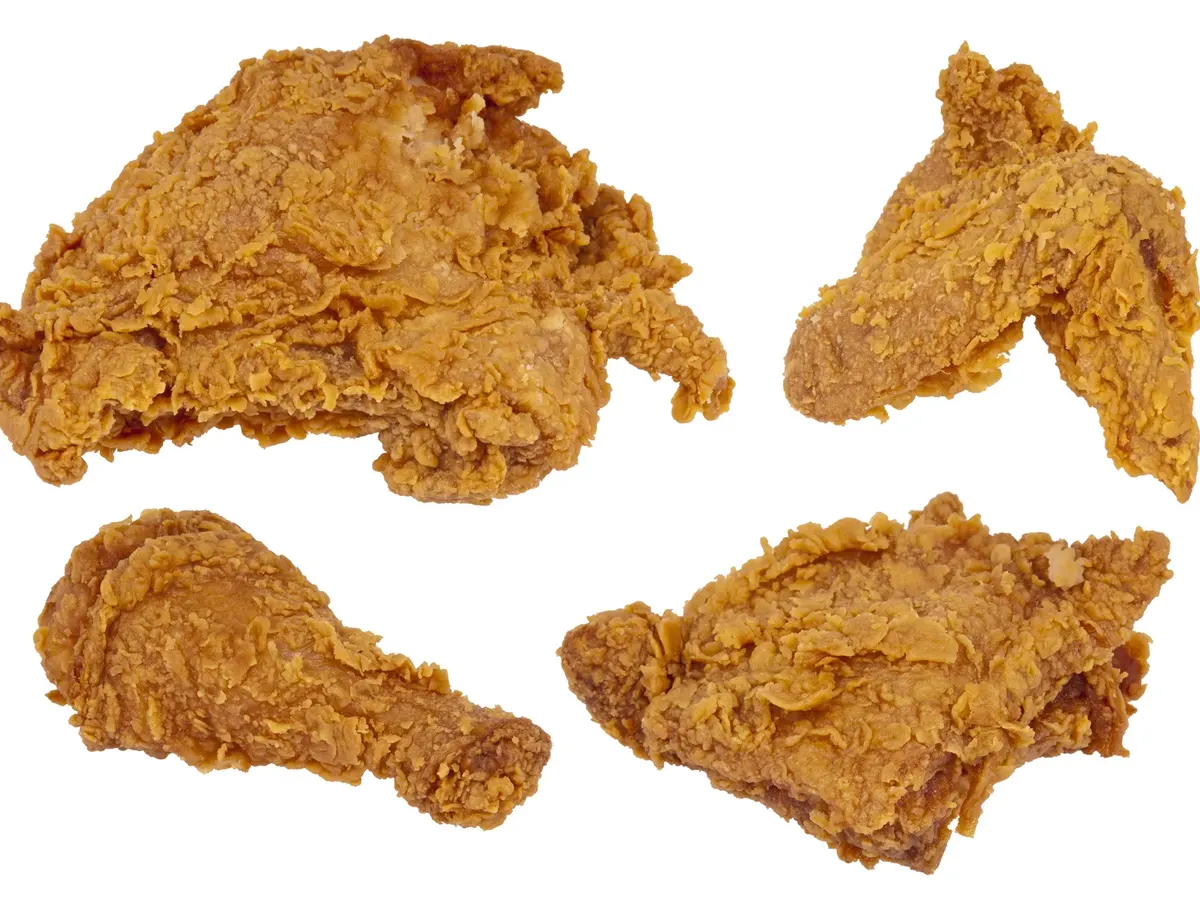
Most coating problems show up at the end of the line, after frying, but start much earlier. The fastest way to fix them is to find the step where the defect first appears. This checklist covers the most common defects, their usual causes and what to check first.
Before you change anything
- Keep samples of good and bad product and note the time and line conditions
- Take products off the belt after each step — predust, batter, breading, fryer — and look at the top, bottom and sides
- Separate adhesion failure (the coating lifts off the product) from cohesion failure (the coating itself cracks while still stuck to the product). They have different causes
Bare spots (voids)
Usual causes: missing or too much predust, ice glaze on frozen product, low batter level, incomplete batter curtain, trapped air, belt too fast, thin bottom crumb layer, poor crumb supply at the sides.
Check: look after each step and on each surface. If the product is already bare after battering, more press-roller pressure at the breader will not fix it.
Too much or too little pickup
Too much: batter thickened by crumbs or temperature change, long contact time, poor drainage, excess dry coating. Too little: too much water, low viscosity, short contact, low batter level, blow-off too strong, or a surface that resists adhesion.
Check: confirm how pickup is calculated (coating ÷ coated weight), then weigh the gain at each step. Measure the actual batter temperature and viscosity. Do not just add water — it also lowers the solids content.
Shelling (coating separates after frying)
Usual causes: product shrinking during cooking, ice glaze at the interface, weak adhesion, a loose layer of predust, trapped steam, or impact at the fryer entry. Poultry skin is a known difficult surface.
Check: is the whole coating lifting off the product, or is the coating itself breaking? Look for bare spots before frying, then at product shrinkage, batter recipe and how products enter the oil.
Coating loss at the fryer entry (blow-off) and lots of debris
Usual causes: excess batter not drained, impact when entering the oil, weak adhesion, existing voids, belt speed not matched to batter viscosity.
Check: watch the fryer infeed, the drop height and how products are released. More debris also speeds up oil breakdown and can block oil lines.
Blisters, pillowing or wrinkled crust after cooling
Usual causes: air trapped in a dipping applicator, trapped steam, unsuitable leavening, uneven mixing.
Check: are the bubbles there before frying, or do they form in the oil? Check mixing and hydration, concave product surfaces and the leavening system. A thicker batter is not a universal fix.
Tempura that does not puff
Usual causes: batter held too long after mixing, too much stirring or pumping shear, repeated recirculation, batter temperature or leavening reaction not suited to the process.
Check: dry-mix batch and storage, time from mixing to use, pump type and return flow. Compare fresh batter with batter that has been circulating.
Crumbs getting finer during the shift
Usual causes: screws and belts breaking the crumbs, long recirculation, the breader running empty during stops, too little fresh crumb added.
Check: sieve-test fresh crumbs against crumbs after a few hours; calculate how long it takes to turn over the machine’s crumb load. If breakdown is fast, match a sturdier crumb or a gentler machine.
Flour bridging and uneven feeding
Usual causes: flour-type coatings flow poorly, pick up moisture and form lumps, especially in hoppers that rely on gravity.
Check: moisture and lumps, then active conveying and vibration. Do not add water to the coating to change how it flows.
Uneven colour, pale or greasy product
Uneven colour (left/right or over time): uneven coating thickness or crumb size, local oil temperature differences, crumb breakdown, oil condition. Record position across the belt and time separately before raising the whole fryer temperature.
Pale and greasy: the actual oil temperature at the infeed is low (high load, cold product, limited heating or fouled heat exchanger), too much surface water, or too short a time. Check temperature under load, not just the set point.
Quick reference
| Defect | Look first at |
|---|---|
| Bare spots | Product after each step; batter level; bottom crumb layer |
| High / low pickup | Pickup formula; weight gain per step; batter temperature and viscosity |
| Shelling | Interface: predust layer, ice glaze, shrinkage |
| Blow-off at fryer | Excess batter removal; drop into the oil |
| Blisters | Before or after frying? Trapped air or steam |
| Tempura not puffing | Time since mixing; shear from mixing and pumps |
| Crumbs getting finer | Recirculation, idling, fresh crumb top-up |
| Pale and greasy | Oil temperature at the infeed under load |
FAQ
Why does breading fall off chicken with skin?
Skin surfaces with fat are hard to coat, and the meat shrinks during frying after the crust has set, which can lift the coating. Surface treatment, the batter system and the frying process have to be looked at together; a thicker batter alone rarely solves it.
Should I pre-freeze products to improve adhesion?
Not automatically. Results depend on the product, and ice glaze on frozen surfaces is itself a common cause of poor adhesion. Test both conditions.
Can you help diagnose a problem on our current line?
Yes. Send photos or videos of the product after each step and your batter and crumb details. Our engineers can also reproduce the problem with your materials in our trial lab.
Technical background: K. Kulp, R. Loewe, K. Lorenz and J. Gelroth (eds.), Batters and Breadings in Food Processing, 2nd edition, AACC International, 2011. Machine data: Bokang Machinery.
Machines mentioned in this guide
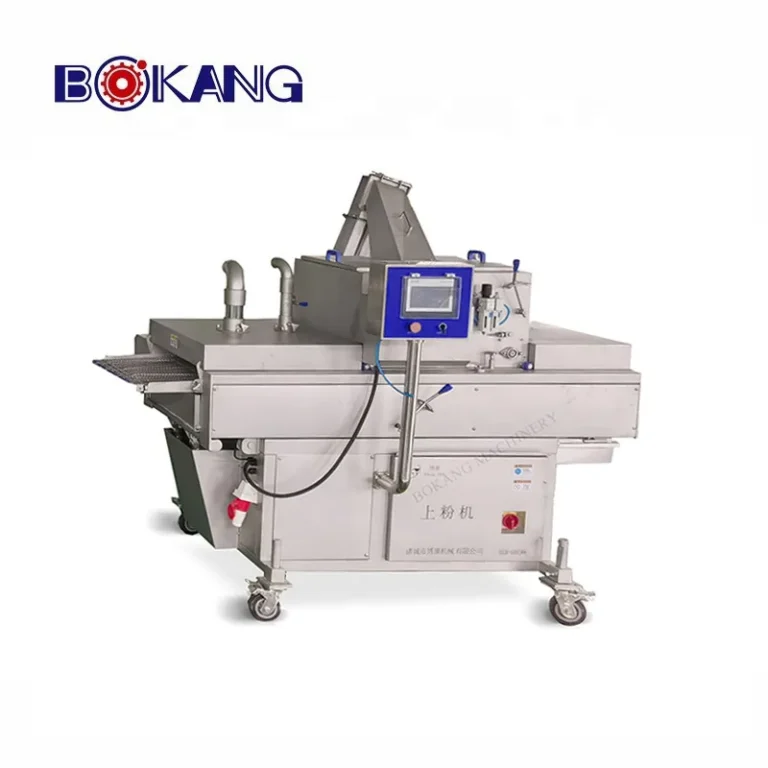 SFJ Series Preduster MachineFlour predusting machine with adjustable top and bottom flour layers, 300–600 mm belt widths. The first step of every batter and breading line.View details →
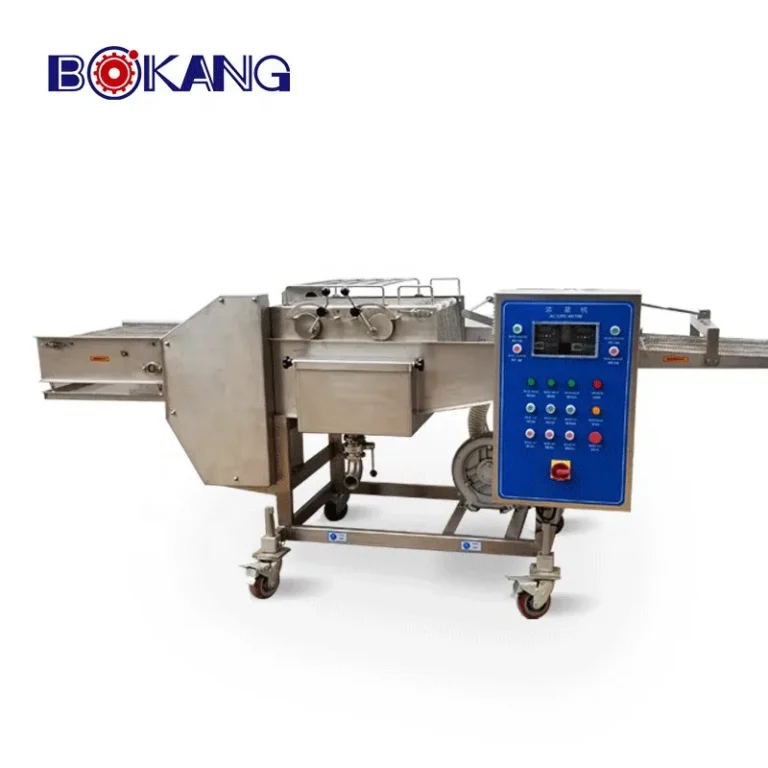 NJJ Series Tempura Batter ApplicatorDipping-type batter machine for thick and tempura batters. Products pass fully submerged between two mesh belts; ice tanks keep the batter cool.View details →
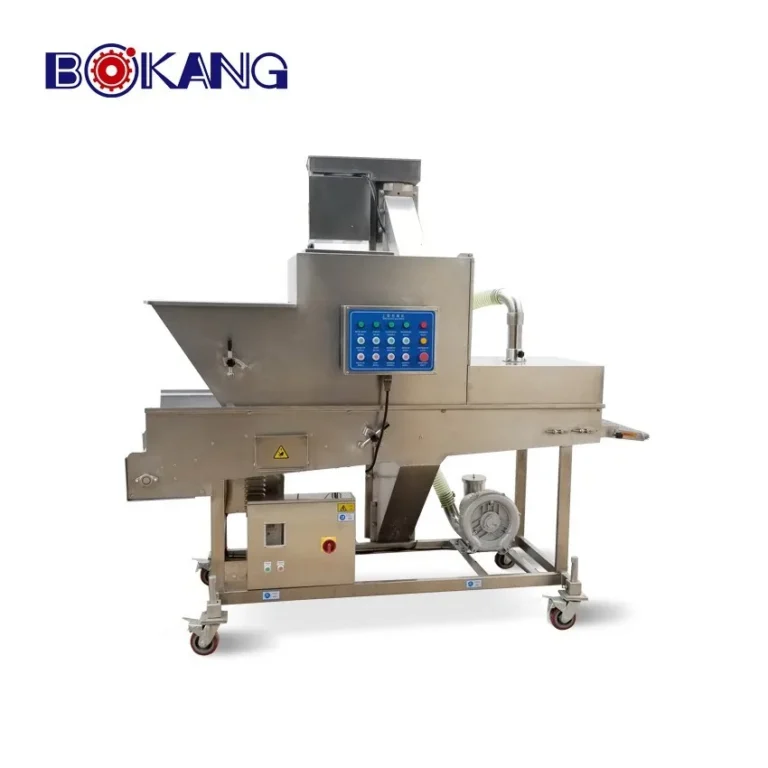 SXJ Series Breading MachineTunnel breading machine for free-flowing breadcrumbs with adjustable top and bottom crumb layers. 300–600 mm belt widths.View details →
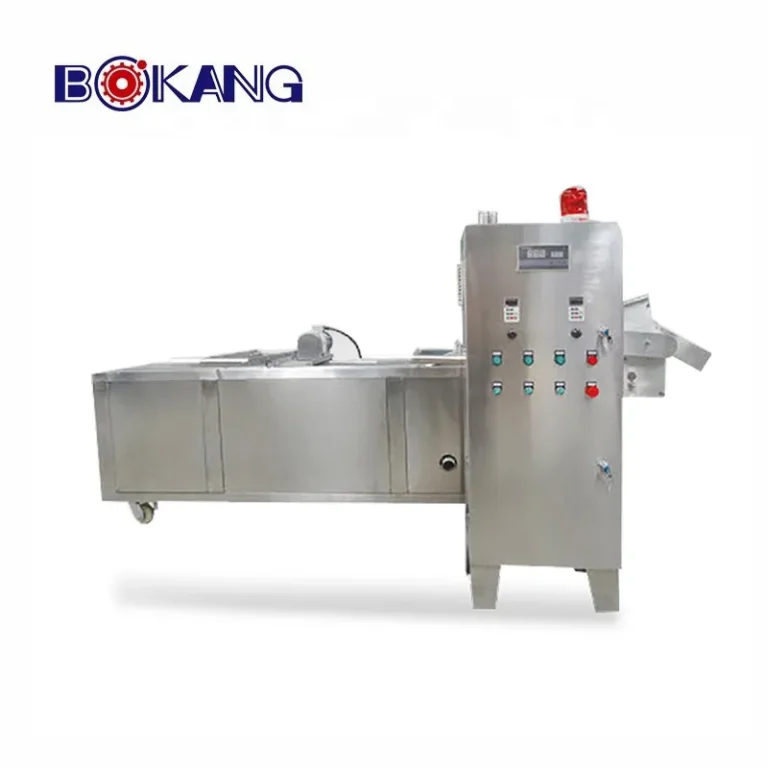 BKL Series Continuous FryerIndustrial continuous fryer with oil-water frying, residue scraping and 15 s–15 min frying time. Electric heating or other energy sources.View details →
Test your product on our machines
Send us your raw material, batter and crumbs. We run them on our coating line in our trial lab for free and share the video and results.