
The crumb you choose shapes the look, crunch and colour of the finished product. It also decides which breading machine you need, because crumbs differ greatly in how they flow and how easily they break.
The main types of dry coating
| Type | Typical character | What to watch in production |
|---|---|---|
| Cracker meal | Denser, can give a hard, crisp bite | Particle size, water absorption and browning vary a lot |
| American bread crumbs | More crust particles, noticeable crunch | Colour, crust share, particle breakage |
| Japanese crumbs (panko) | Flaky, open, low density, little dark crust | Gentle handling, minimal recirculation |
| Extruded crumbs | Porosity, shape and fry tolerance can be designed | Actual specification decides performance |
| Flour breaders | Very fine; give a homestyle look | Bridging, lumps, dust and fine residue in the oil |
Particle size: coarse, medium and fine
A common classification is coarse (about 2.4–4.7 mm), medium (about 1.2–2.4 mm) and fine (below about 1.2 mm). Suppliers use different sieve standards, so always ask for the sieve specification behind words like “coarse” or “fine”.
- Fine particles absorb water quickly and form a more continuous coating
- Coarse particles give surface texture, but used alone can leave gaps
- Blends combine texture, weight and coverage
Particle size is not the only factor. Open, porous crumbs are lighter and absorb water and oil more easily, but they are also weaker. A coarse dense crumb and a coarse porous crumb behave differently.
Fry tolerance and browning
Some crumbs colour quickly, which suits short par-frying. Frozen products that need longer frying need crumbs whose browning speed matches the frying time. A golden surface does not mean the inside is cooked.
Why panko gets finer during the shift
Panko’s flaky structure breaks in screw conveyors, against belts and with every recirculation. The product at the end of a shift can look quite different from the first products. The fixes are mechanical and procedural, not just adding more crumbs:
- Handle crumbs gently, with more gravity flow and fewer screws
- Recirculate as little as possible
- Top up with fresh crumbs regularly
- Stop the breader running empty when the line stops
- Compare a sieve test of fresh crumbs with crumbs after some hours of running
Flour coatings flow differently
Flour-type breaders flow poorly and can bridge or clog in hoppers when they pick up moisture. Machines for flour usually move the material actively with screws or belts rather than relying on gravity, and dust collection is worth considering.
Fresh crumbs are a different material
Fresh (wet) breadcrumbs can contain more than 30% moisture, are harder to store and need equipment that can handle wet crumbs. They are not a drop-in replacement for dry crumbs.
Matching the crumb to the machine
| Crumb / product | Bokang machine | Why |
|---|---|---|
| Free-flowing dry crumbs on patties, fish fingers, onion rings | SXJ tunnel breading machine | Bottom crumb bed plus top curtain; adjustable layers |
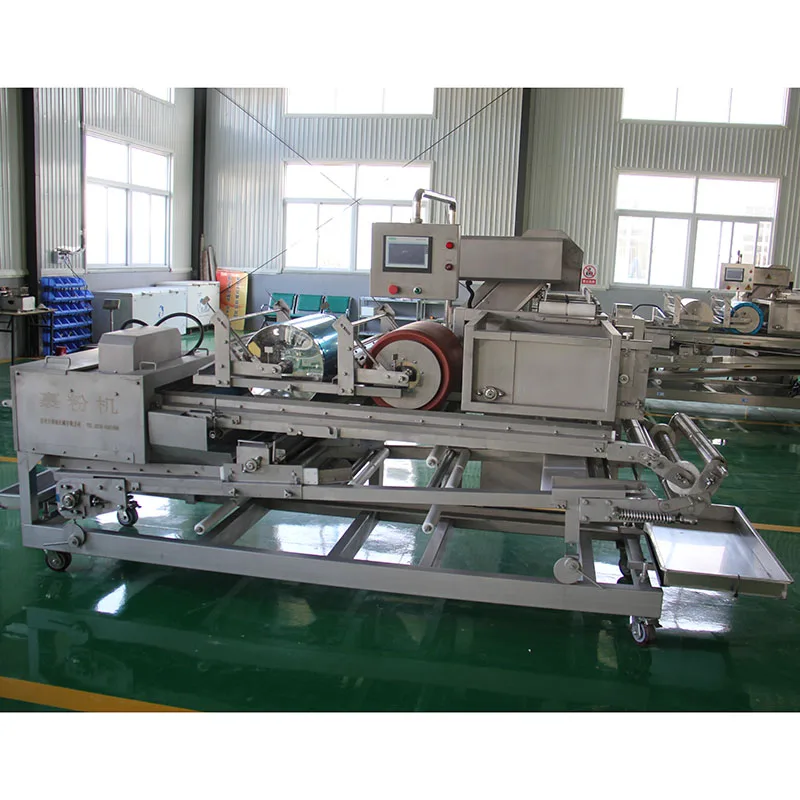
| Panko and large fresh crumbs | XXJ belt type breading machine | Belt conveying with low crumb damage; two press rollers |
| Flour or crumbs on bite-size pieces | GFJ600 drum breader | Drum coats folds; sieve removes lumps |
| Oysters, butterfly shrimp, skewered items | DLS200 3D breading machine | Coats round and irregular shapes fully |
Press rollers help fix crumbs onto the product. The pressure must suit the product height, how fragile it is and the crumb structure; there is no universal setting, so it is adjusted during trials.
FAQ
Can I run panko on a standard breading machine?
It may work, but panko tends to break down faster with screw conveying and recirculation. A belt-based machine like the XXJ is designed to protect large crumbs.
Why are there bare spots on the underside of my product?
The bottom crumb layer may be too thin, or crumbs are not supplied evenly across the belt. Check the bottom, top and sides separately right after the breader.
Which crumb gives the crunchiest result?
It depends on the product and frying. Panko gives a light, flaky crunch; cracker meal and American crumbs give a harder bite. Test a few crumbs on your product in our trial lab.
Technical background: K. Kulp, R. Loewe, K. Lorenz and J. Gelroth (eds.), Batters and Breadings in Food Processing, 2nd edition, AACC International, 2011. Machine data: Bokang Machinery.
Machines mentioned in this guide
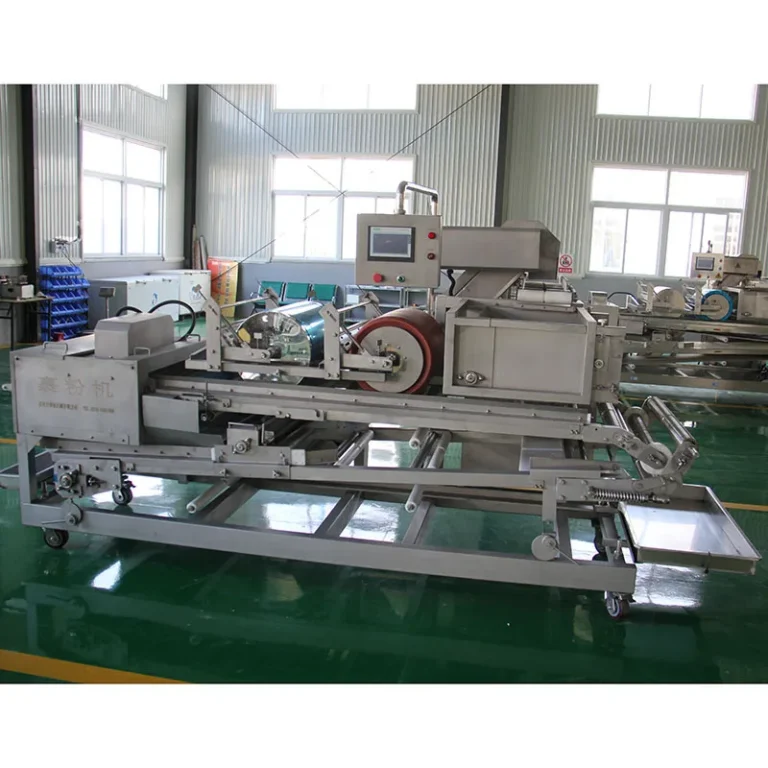 XXJ Belt Type Breading Machine for Fresh & Panko CrumbsBelt-conveyed breading machine for large fresh and panko crumbs. Two press rollers press crumbs on firmly with minimal crumb breakage.View details →
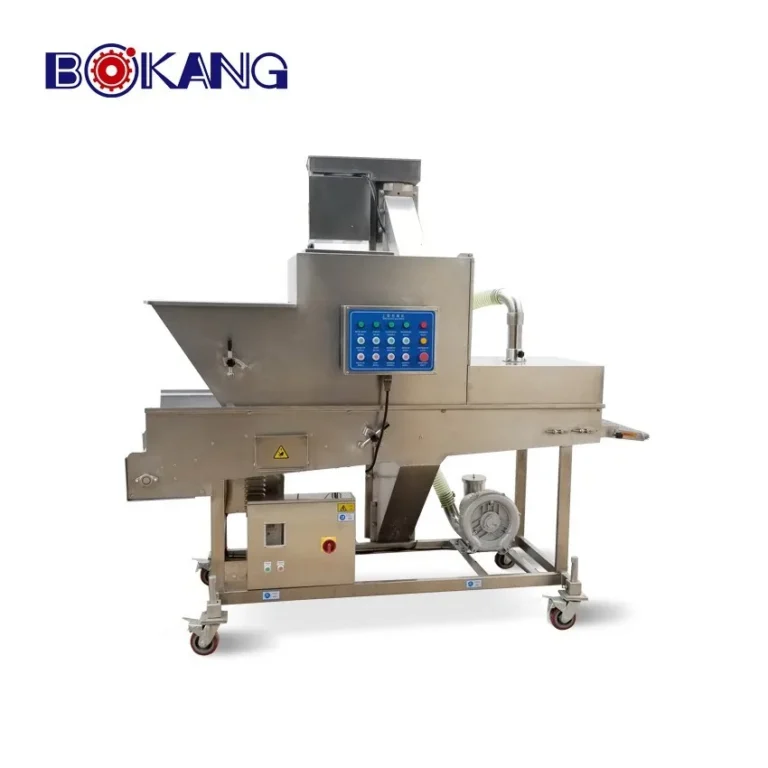 SXJ Series Breading MachineTunnel breading machine for free-flowing breadcrumbs with adjustable top and bottom crumb layers. 300–600 mm belt widths.View details →
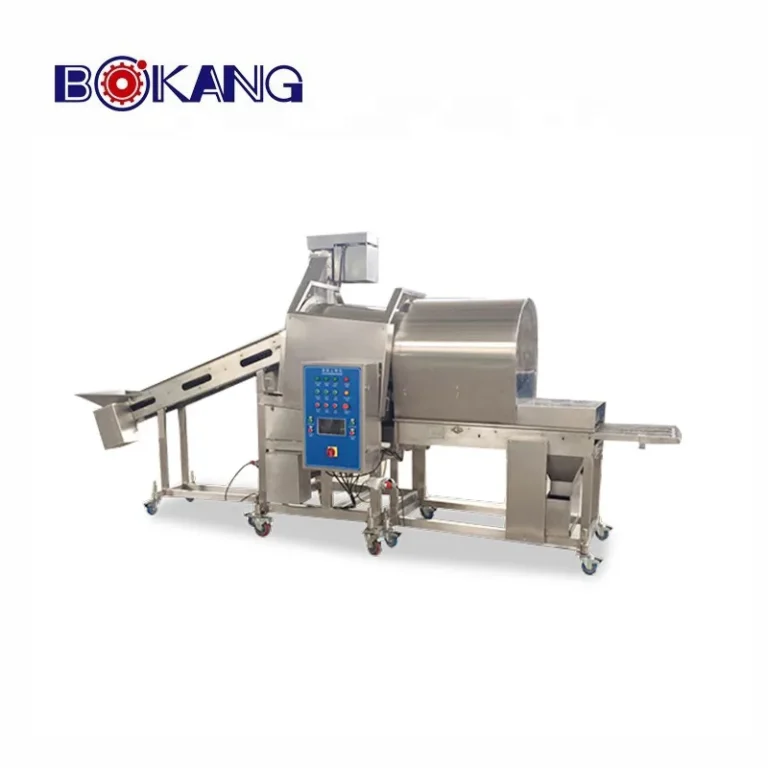 GFJ600 Drum Breader & Drum PredusterRotating drum coats irregular and bite-size pieces evenly, including folds. Ideal for popcorn chicken, nuggets and tenders.View details →
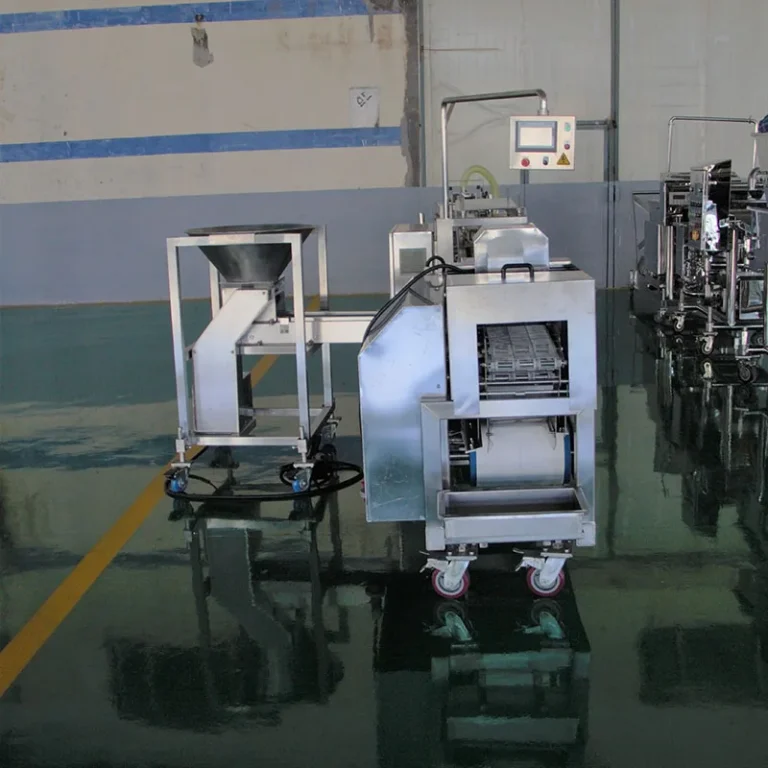 DLS200 3D Batter & Breading MachineCoats spherical, cylindrical and irregular products that flat breaders miss: oysters, eggs, butterfly shrimp and skewered items.View details →
Test your product on our machines
Send us your raw material, batter and crumbs. We run them on our coating line in our trial lab for free and share the video and results.