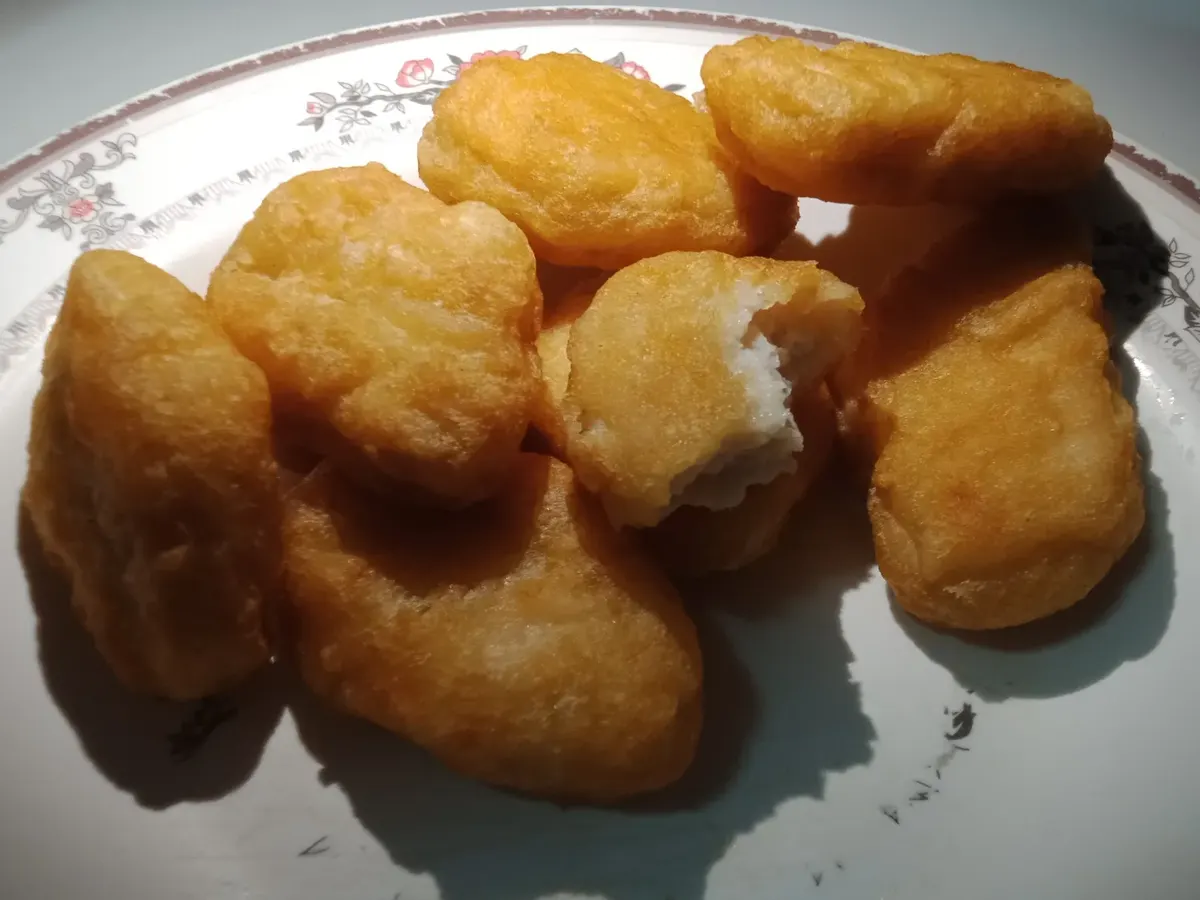
A chicken nugget line turns minced or chopped chicken into formed, coated, par-fried pieces ready for freezing. The same line, with different moulds and coatings, can also make burger patties, popcorn chicken or fish nuggets. Here is how the steps fit together and what decides the size of each machine.
Process flow
- Loading the meat
- Forming
- Predusting
- Battering
- Breading
- Par-frying
- Air cooling
- Freezing and packing
1. Forming: shape and portion weight
The forming machine fills a mould plate with meat, presses out the shape and places the pieces on the belt. Portion accuracy here affects product cost and the frying time downstream. Moulds can produce round, star, cartoon and other shapes.
| Model | Capacity | Product size | Notes |
|---|---|---|---|
| CXJ100 | 35 pcs/min | — | Compact, tabletop; small plants and kitchens |
| CXJ400 | 200–600 kg/h | Ø135 mm max., 6–25 mm thick | Siemens PLC, FESTO pneumatics, weight error ≤1% |
| CXJ600 | 500–1000 kg/h | Ø150 mm max., 6–40 mm thick | Four-screw feeding, weight error ≤1% |
A bucket lifter tips 250 kg baskets of meat into the hopper so operators do not lift by hand.
2. Predusting, battering and breading
Formed nuggets are predusted on an SFJ preduster, battered on an LJJ or NJJ applicator and breaded on an SXJ breading machine. Choose the same belt width for all coating machines so products transfer smoothly: 400 mm after a CXJ400, 600 mm after a CXJ600.
For popcorn chicken and other bite-size, irregular pieces, a GFJ600 drum breader tumbles the product so folds and edges are coated, which gives the homestyle look. Small pieces need careful spacing: too far apart and the belt is under-loaded, too close and pieces stick together as doubles.
3. Par-frying sets the coating
The BKL continuous fryer sets the batter and crumbs so the coating survives freezing, packing and transport. Most nuggets are par-fried rather than fully cooked in the fryer; whether the product is fully cooked depends on the complete heat process and must be verified. Frying time is set by the conveyor speed, and the oil pan size and heating power are designed around your product moisture and frying time.
Watch the oil temperature at the infeed while the line is loaded, not just the set point: cold product and high throughput can pull the local temperature down and give pale, greasy nuggets.
4. Cooling and freezing
Right after frying, the coating is hot while the core may still be cold, and the crust is fragile. An air cooling conveyor drains oil and lowers the temperature before the freezer. Very fast surface freezing can crack some coatings, so evaluate the whole temperature path from fryer to freezer to packing.
Estimating line capacity
Belt width alone does not decide kg/h. Capacity depends on how densely the belt is loaded, belt speed and the yield of each step:
Capacity (kg/h) = belt loading (kg/m²) × effective width (m) × belt speed (m/min) × 60 × yield
Example only: 5 kg/m² × 0.6 m × 3 m/min × 60 × 0.95 ≈ 513 kg/h. Your real figure depends on nugget size, spacing and the frying time you need, which in turn fixes the belt speed through the fryer. That is why we size a line from your product, not from a catalogue number.
Floor plan and utilities
- Line length: forming, three coating machines, fryer, cooling and the freezer in one flow
- Space for batter mixing, crumb storage and cleaning
- Electrical supply (380 V / 50 Hz standard on our machines; other voltages on request)
- Compressed air and water for the forming machine (CXJ400/600: 6 bar air, 2 bar water)
- Fryer heating and oil filtration, plus exhaust
We design the layout for your building. See custom production line design.
What to send us for a quotation
- Product: shape, size, weight and recipe type
- Target capacity in kg/h and shifts per day
- Coating: predust, batter type, crumb type
- Par-fry only, or full cooking needed
- Available floor space, voltage and existing freezer
FAQ
How much space does a nugget line need?
It depends on capacity and whether frying, cooling and freezing are in line. Send us your floor plan and we prepare a layout drawing.
Can the same line make burger patties and fish nuggets?
Yes. Change the forming mould and adjust the coating recipe and machine settings.
Do I need a fryer in the line?
Most frozen coated nuggets are par-fried to set the coating before freezing. Some products are sold raw-coated and frozen without frying.
Technical background: K. Kulp, R. Loewe, K. Lorenz and J. Gelroth (eds.), Batters and Breadings in Food Processing, 2nd edition, AACC International, 2011. Machine data: Bokang Machinery.
Machines mentioned in this guide
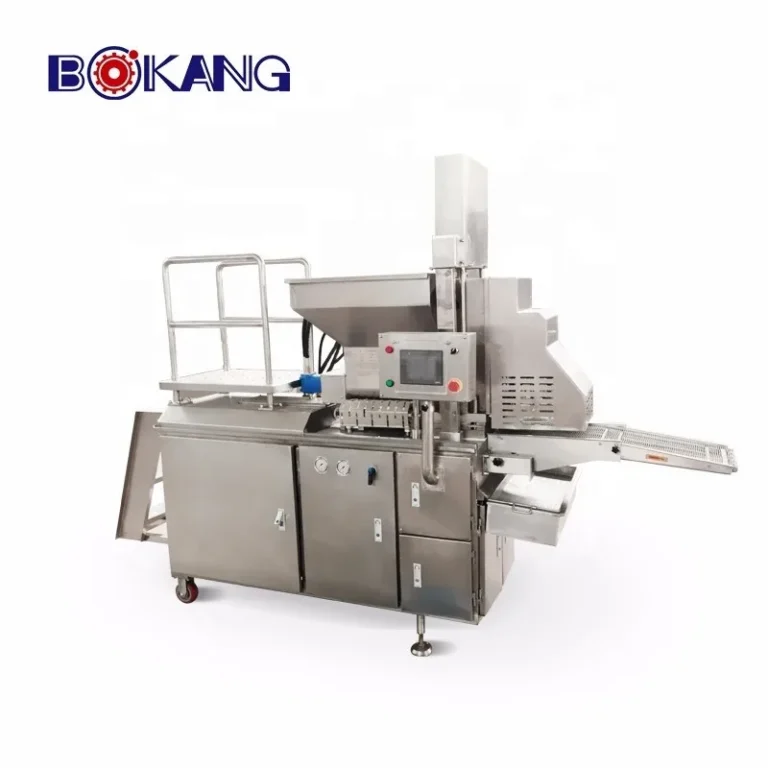 CXJ400 Automatic Forming Machine200–600 kg/h automatic former for nuggets, patties and hash browns. Siemens PLC, FESTO pneumatics, ≤1% weight error.View details →
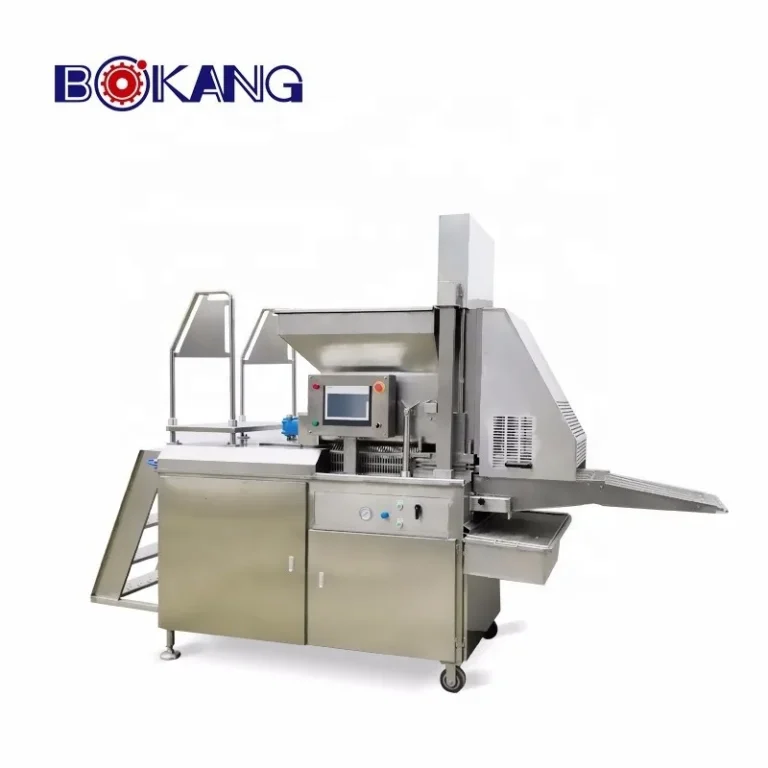 CXJ600 High-Capacity Forming Machine500–1000 kg/h forming machine with four-screw feeding to protect meat texture. Up to 150 mm diameter and 40 mm thickness.View details →
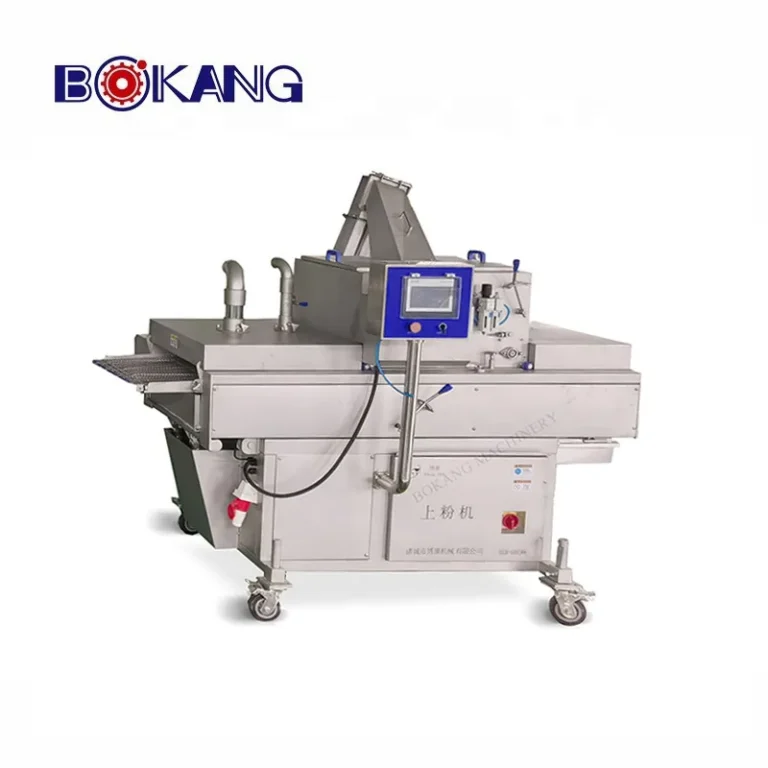 SFJ Series Preduster MachineFlour predusting machine with adjustable top and bottom flour layers, 300–600 mm belt widths. The first step of every batter and breading line.View details →
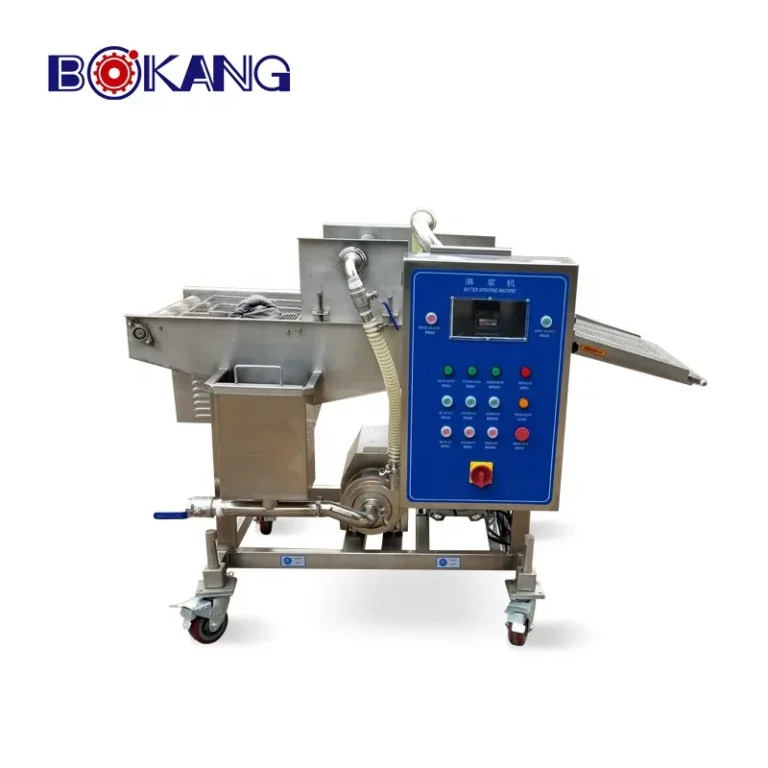 LJJ Series Batter Spraying MachineBatter curtain plus lower bath for an even wet coating on both sides. Adjustable pump, blower and belt speed for thin and medium batters.View details →
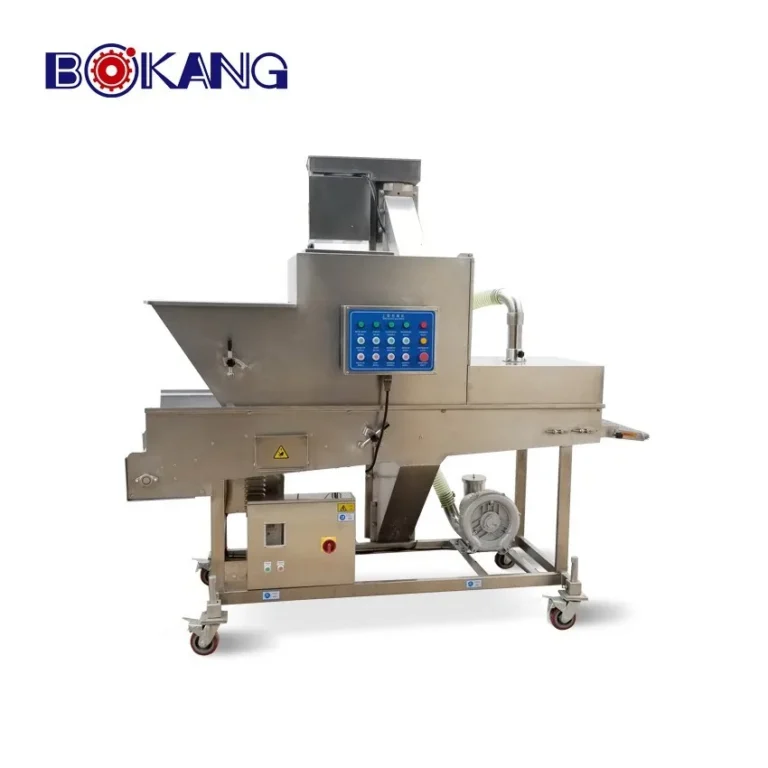 SXJ Series Breading MachineTunnel breading machine for free-flowing breadcrumbs with adjustable top and bottom crumb layers. 300–600 mm belt widths.View details →
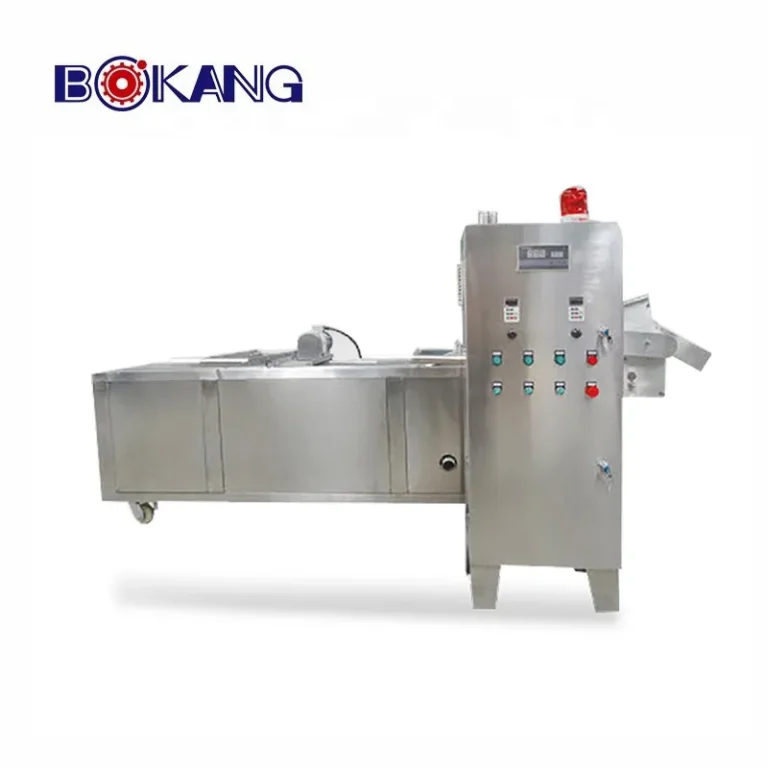 BKL Series Continuous FryerIndustrial continuous fryer with oil-water frying, residue scraping and 15 s–15 min frying time. Electric heating or other energy sources.View details →
Test your product on our machines
Send us your raw material, batter and crumbs. We run them on our coating line in our trial lab for free and share the video and results.