
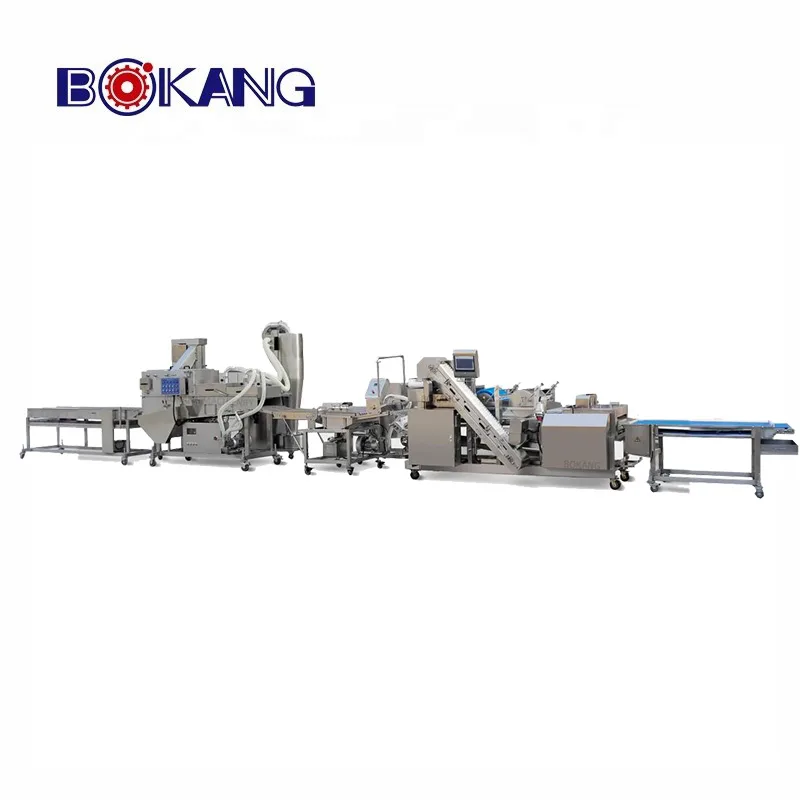
Chicken nuggets, breaded shrimp, fish fillets and onion rings all go through the same basic sequence: a dry predust, a wet batter and a dry outer coating, followed by frying. Each step has a different job, and most coating defects come from one step not doing its job. This guide explains what happens at each stage and what to watch when you plan or run a line.
The basic sequence
A conventional single-pass line runs: forming, cutting or manual loading → predusting → battering → breading → frying → further cooking, cooling or freezing.
- Predust
- Batter
- Breading
- Frying
- Cooling or freezing
Note that “single pass” refers to one batter-plus-breading pair. The predust is extra, so a single-pass line with predust still has two dry-coating machines.
Step 1: Predusting prepares the surface
The product drops onto a bed of predust, more predust falls on top, and the excess is blown or vibrated off. The predust prepares the surface, improves adhesion of the batter, protects some seasonings and adds a little weight.
The key is complete but not excessive coverage. Bare areas lead to voids later; thick, loose patches of flour form a weak layer between product and batter, which is a common cause of coating that peels off after frying (shelling).
Bokang machine: SFJ series preduster, with adjustable top and bottom flour layers and a blower and vibrator to remove excess flour. For sticky or soft pieces, a rotating drum coater can be used for predusting.
Step 2: Battering glues the system together
Batters fall into two broad groups:
- Adhesion (interface) batters connect the product to the breadcrumbs. They normally contain no leavening; the crumbs provide most of the look and bite.
- Tempura (leavened, puff) batters are usually the final wet layer. After frying they form the visible crust themselves, so they must adhere, hold gas and expand. Mixing, pumping, recirculation and waiting time all affect how well they puff.
The type of batter largely decides the applicator: curtain (overflow) machines suit pumpable batters on simple shapes, while dipping (submerger) machines keep the product fully under the batter and are often preferred for thick or tempura batters. See our guide Dipping vs overflow batter applicators.
Step 3: Breading adds texture and appearance
In the industry, “breading” means any dry coating applied over batter: American-style bread crumbs, Japanese panko, cracker meal, extruded crumbs or simply seasoned flour. The product must land on a continuous bottom layer of crumbs, receive enough crumbs from above, and have enough material on the sides. Thin bottom layers or poor side supply are classic causes of bare spots on the underside and edges.
Free-flowing crumbs work well in a tunnel breading machine; large, fragile panko needs gentle, belt-based handling, as in our XXJ breading machine. More in Panko vs standard breadcrumbs.
Single, double and triple pass
Each pass is one batter step followed by one dry coating step. Double and triple pass lines repeat this two or three times to improve coverage, build a thicker crust or seal the product better, for example cheese sticks, where any gap lets cheese leak during frying. More passes are not automatically better: the number of passes should follow from the product and the finished quality you need.
Frying sets the coating
Frying gives the coating mechanical strength, frying flavour, colour and texture, and may partly or fully cook the product. Many coated products are only par-fried to set the coating before freezing. A golden surface does not prove that the centre is cooked; that has to be verified with the real product and heat process.
See the BKL continuous fryer for in-line frying.
Measuring coating pickup correctly
Pickup is the coating weight as a share of the coated weight, not of the raw weight. Mixing the two up is one of the most common causes of confusion between suppliers and customers.
| Term | Formula | Example (10 g piece coated to 16 g) |
|---|---|---|
| Coating pickup | coating ÷ coated weight | 6 ÷ 16 = 37.5% |
| Weight gain on raw product | coating ÷ raw weight | 6 ÷ 10 = 60% |
Weigh at comparable stages. After frying, the weight also changes through moisture loss and oil uptake, so final fried weight minus raw weight is not the coating weight.
Choosing the machines for each step
| Step | Bokang machine | Use it when |
|---|---|---|
| Predust | SFJ preduster | Most nugget, fillet and patty lines |
| Predust (bulk pieces) | GFJ600 drum | Sticky or bite-size pieces, homestyle look |
| Batter, thick or tempura | NJJ batter applicator | Product must be fully submerged |
| Batter, pumpable | LJJ batter spraying machine | Simple shapes, curtain coating |
| Breading, free-flowing crumbs | SXJ breading machine | Patties, fish fingers, onion rings |
| Breading, panko / fresh crumbs | XXJ breading machine | Large, fragile crumbs |
| Irregular shapes | DLS200 3D breader | Oysters, butterfly shrimp, skewers |
FAQ
Is predust always necessary?
Most nugget, fillet and patty lines use it because it prepares the surface and improves batter adhesion. Some tempura-style products go straight into batter. Testing with and without predust on your own product is the reliable way to decide.
What is the difference between batter and breading?
Batter is a wet coating made by mixing a dry mix with water; breading is a dry coating applied over the batter, such as bread crumbs, panko or seasoned flour.
Why does my coating peel off after frying?
Peeling (shelling) can come from loose predust, ice glaze on frozen product, weak adhesion, product shrinkage during cooking or impact at the fryer entry. See our troubleshooting guide for how to locate the cause.
Technical background: K. Kulp, R. Loewe, K. Lorenz and J. Gelroth (eds.), Batters and Breadings in Food Processing, 2nd edition, AACC International, 2011. Machine data: Bokang Machinery.
Machines mentioned in this guide
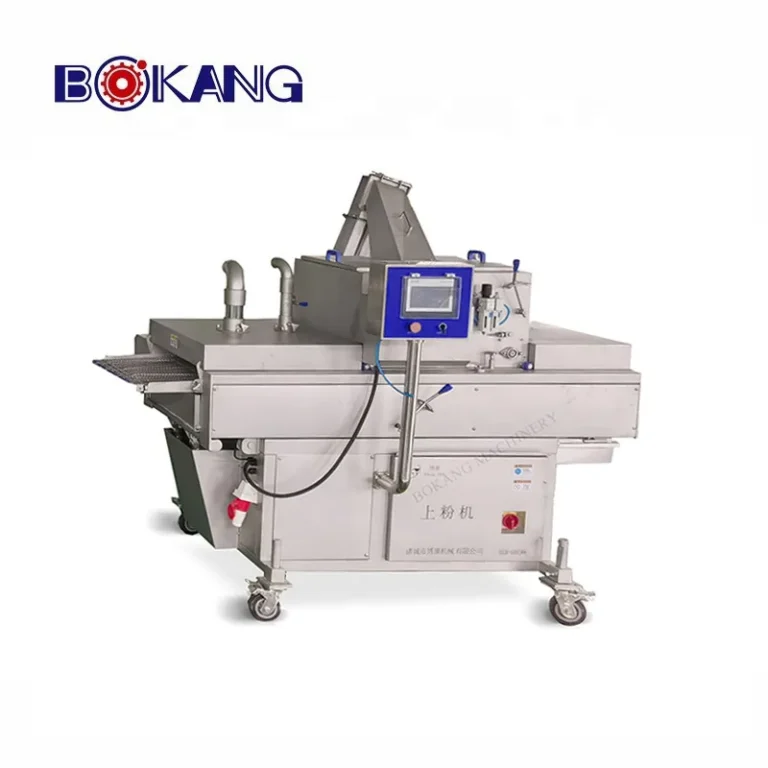 SFJ Series Preduster MachineFlour predusting machine with adjustable top and bottom flour layers, 300–600 mm belt widths. The first step of every batter and breading line.View details →
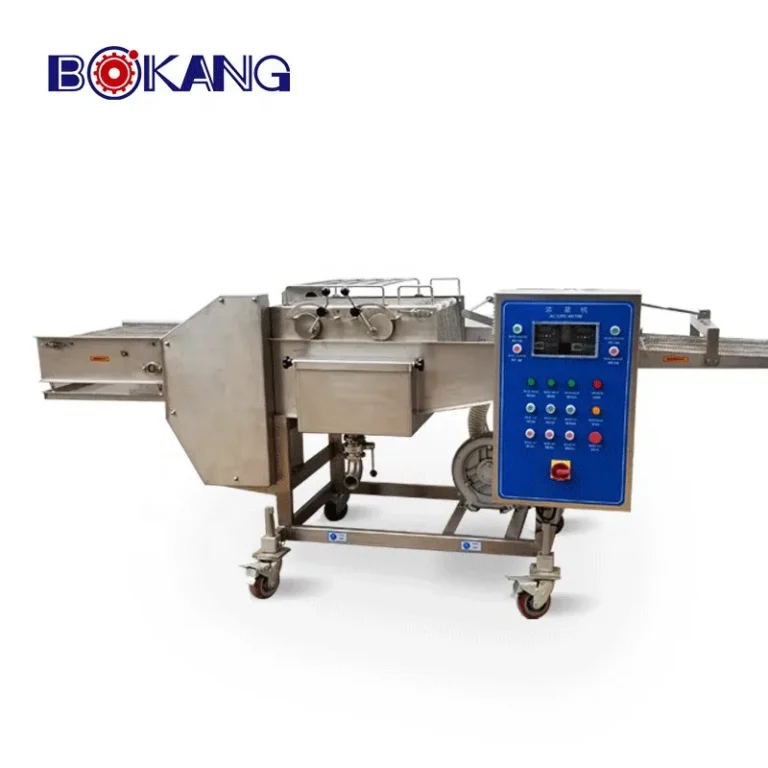 NJJ Series Tempura Batter ApplicatorDipping-type batter machine for thick and tempura batters. Products pass fully submerged between two mesh belts; ice tanks keep the batter cool.View details →
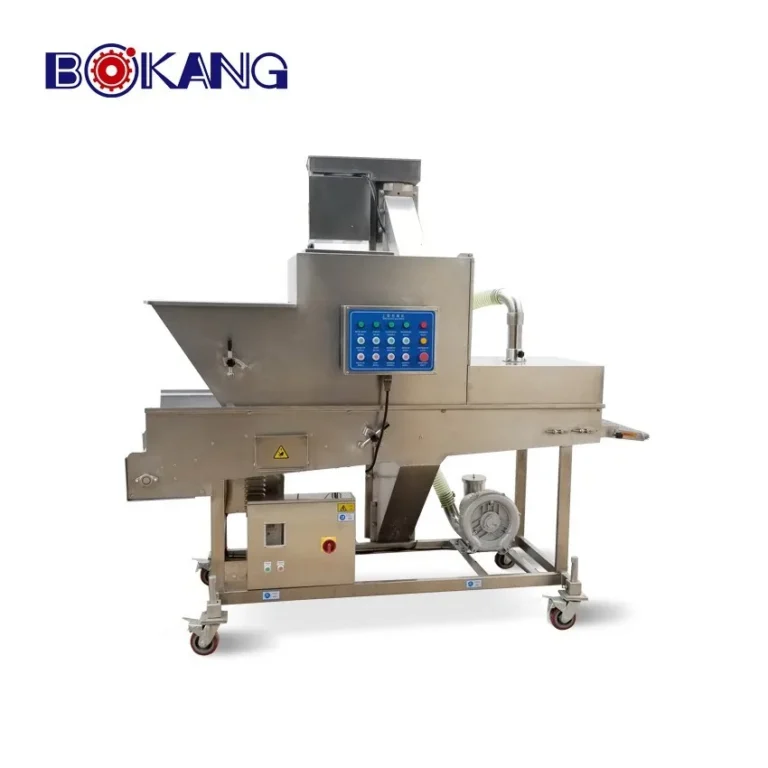 SXJ Series Breading MachineTunnel breading machine for free-flowing breadcrumbs with adjustable top and bottom crumb layers. 300–600 mm belt widths.View details →
Test your product on our machines
Send us your raw material, batter and crumbs. We run them on our coating line in our trial lab for free and share the video and results.